
AI Governance: Access Without Giving Away the Keys.


AI governance is not about preventing employees from using AI. It is about determining what AI can access, what it can do, and where human oversight still belongs.
Imagine hiring a new employee and, on their first day, giving them access to every company file, system, and department.
Nobody would do that.
Not because the employee cannot be trusted. They simply do not need access to everything to perform their job.
AI should work the same way.
AI becomes more useful when it can work with company information. It can review documents, answer internal questions, prepare reports, and help employees complete repetitive work faster.
But once AI starts working with company data, a few questions need to be answered.
What information can it access?
Who can use it?
Where does that information go?
What is the AI allowed to do?
And who checks its work?
That is AI governance.
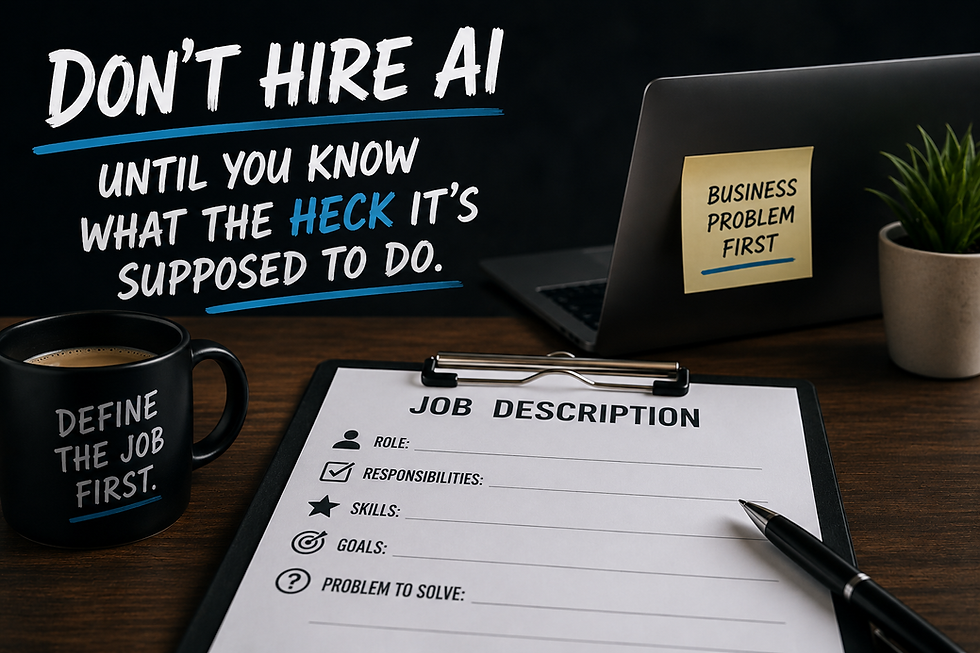
It does not have to begin with a massive policy document. It can start with the job you want AI to perform.
If the job is reviewing customer contracts, AI may need access to those contracts. It probably does not need access to payroll records, employee information, or every file across the company.
The same applies to employee permissions. If someone cannot normally access certain information, asking an AI assistant a question should not give them a new way around those controls.
Companies also need to understand what happens to the information employees share with an AI tool.
Is it stored?
Is it used to train a model?
Can the company see who used the tool and what information was accessed?
Then there is the question of what AI is allowed to do.
There is a big difference between drafting an email and sending it. There is a difference between recommending a payment and approving one.
As AI moves from answering questions to taking action, human review and accountability become more important.
AI can perform the work.
It cannot own the consequences.
Good governance is not about blocking AI. It is about giving employees an approved way to use it, with clear boundaries around the data it can access, the actions it can take, and the decisions that still require a person.
Give AI a clear job.
Give it the access needed to do that job.
Just do not hand it the keys to everything.


Comments