
AI ROI: Using AI Is One Thing. Calculating the Value of AI Is Another.


A lot of companies are using AI now. McKinsey found that 88% of organizations surveyed were using AI in at least one business function. But only 39% reported an enterprise-level earnings impact. PwC also found that 56% of CEOs had seen neither higher revenue nor lower costs from AI.
That is the gap. AI adoption is clearly rising. Calculating the value is the harder part.
It is easy to measure activity. How many licenses were activated. How often employees logged in. How many prompts were submitted. But those numbers only show activity, not the value AI is creating for the business.
The better question is: what is AI actually changing for the business, and how would you calculate it?
Is work getting done faster? Is quality improving? Are teams creating more capacity?
Are costs going down? Is revenue increasing? Is risk being reduced?
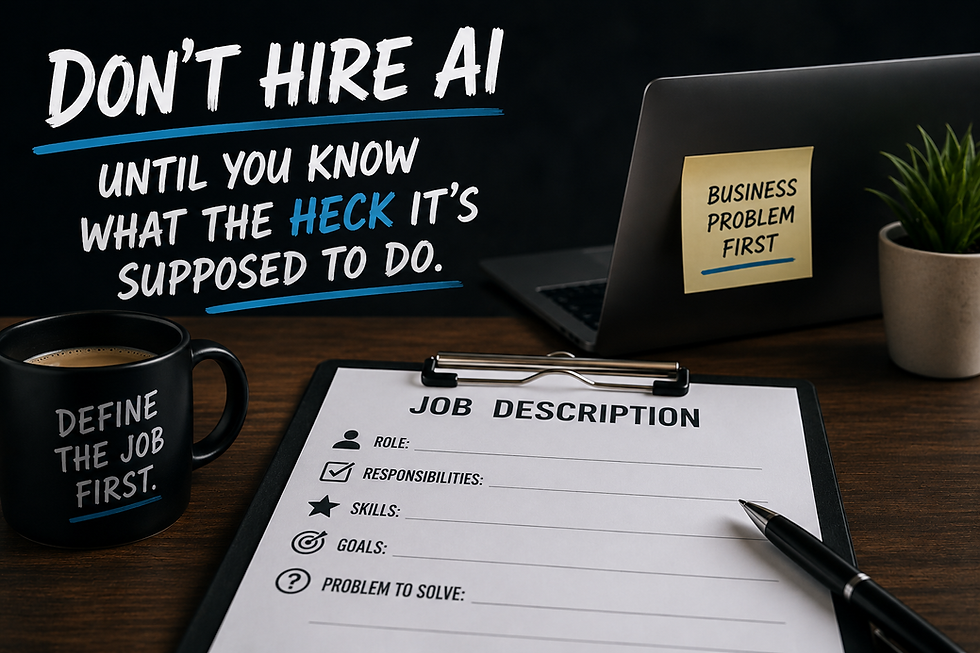
Those are the areas where value may exist. But if they were never defined up front, it becomes difficult to calculate the value of AI. Part of the problem is that many companies started with the tool before defining the outcome.
If AI is supposed to help with proposal writing, customer support, reporting, software development, or contract review, start there. Look at that process and ask what should improve. Time? Accuracy? Throughput? Cost? Something else?
Without defining what success looks like, it is hard to calculate whether AI created meaningful business value or just more activity.
That does not mean every AI initiative needs a perfect ROI model on day one. But it does mean there should be a reason the project exists and some way to measure whether it is moving the business in the right direction.
Using AI is one thing.
Calculating the value is another.
Understanding the desired outcome a business expects to achieve by leveraging AI will get you closer to ROI.


Comments